A useful wholesale jujube quote starts with a product specification, not a grade label alone. U.S. buyers should define the fruit, size, condition, pack, and acceptance reference they need, then ask each supplier to quote against the same brief.
This guide is for importers, Asian grocery buyers, distributors, and private-label teams sourcing Chinese red dates (jujubes). It focuses on practical purchasing decisions; it does not assume that a particular origin, grade name, carton weight, or shelf life is available for every lot.
For current product options, see Red Dates (Jujube) wholesale.
1. Name the product clearly
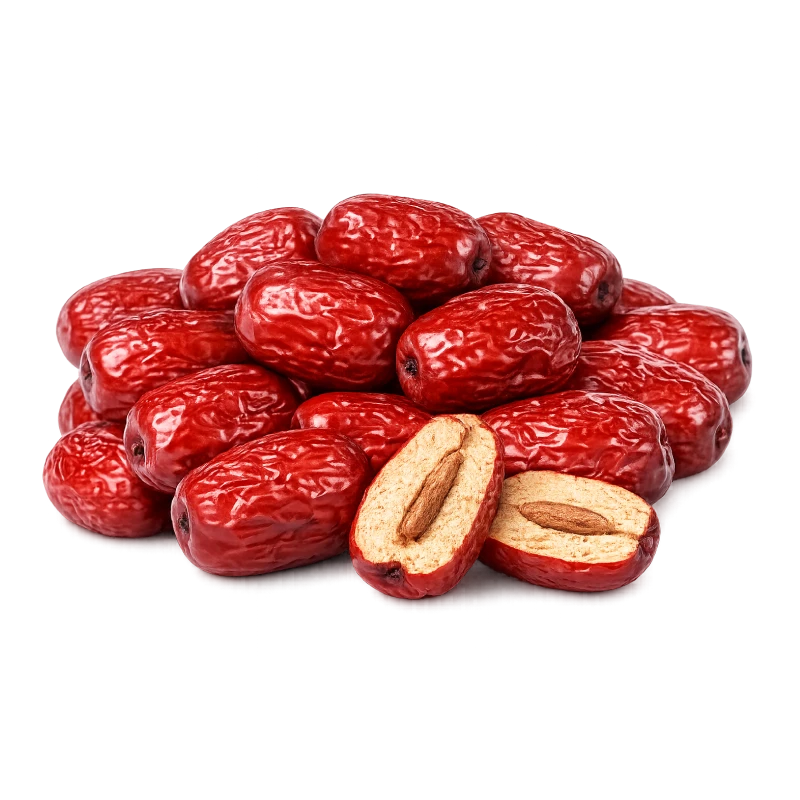
“Dates” can refer to different fruits in English. State that you are sourcing Chinese red dates, also called jujubes, rather than date-palm fruit. Include the product name used by the supplier and the intended use: tea, soup, snack, pantry retail, or a mixed gift set.
Also clarify whether you want whole fruit, pitted fruit, sliced fruit, or another preparation. These are different specifications and can change appearance, handling, pack suitability, and price.
2. Define what a grade means before comparing “A+”
Grade names such as “A,” “A+,” “premium,” or “large” are not useful on their own unless the supplier explains the underlying criteria. They may reflect a supplier’s internal sorting system rather than one universal market standard.
If a listing or quote says “A+ Hotan red date,” ask the supplier to confirm in writing:
- what “A+” means for that specific lot
- the size range and how size is measured
- whether the stated origin is supported by the supplier’s lot or sourcing records
- the acceptable share of split, blemished, undersized, or broken fruit
- whether the sample represents the lot that will be packed
Do not treat “A+” as a certification or a guaranteed quality level, and do not use a named origin on your label or product page unless the supplier can substantiate it and the claim is appropriate for your market.
3. Turn buyer preferences into measurable fields
Instead of writing “good quality,” create a short specification that can be checked against the sample and shipment.
| Field | What to agree with the supplier |
|---|---|
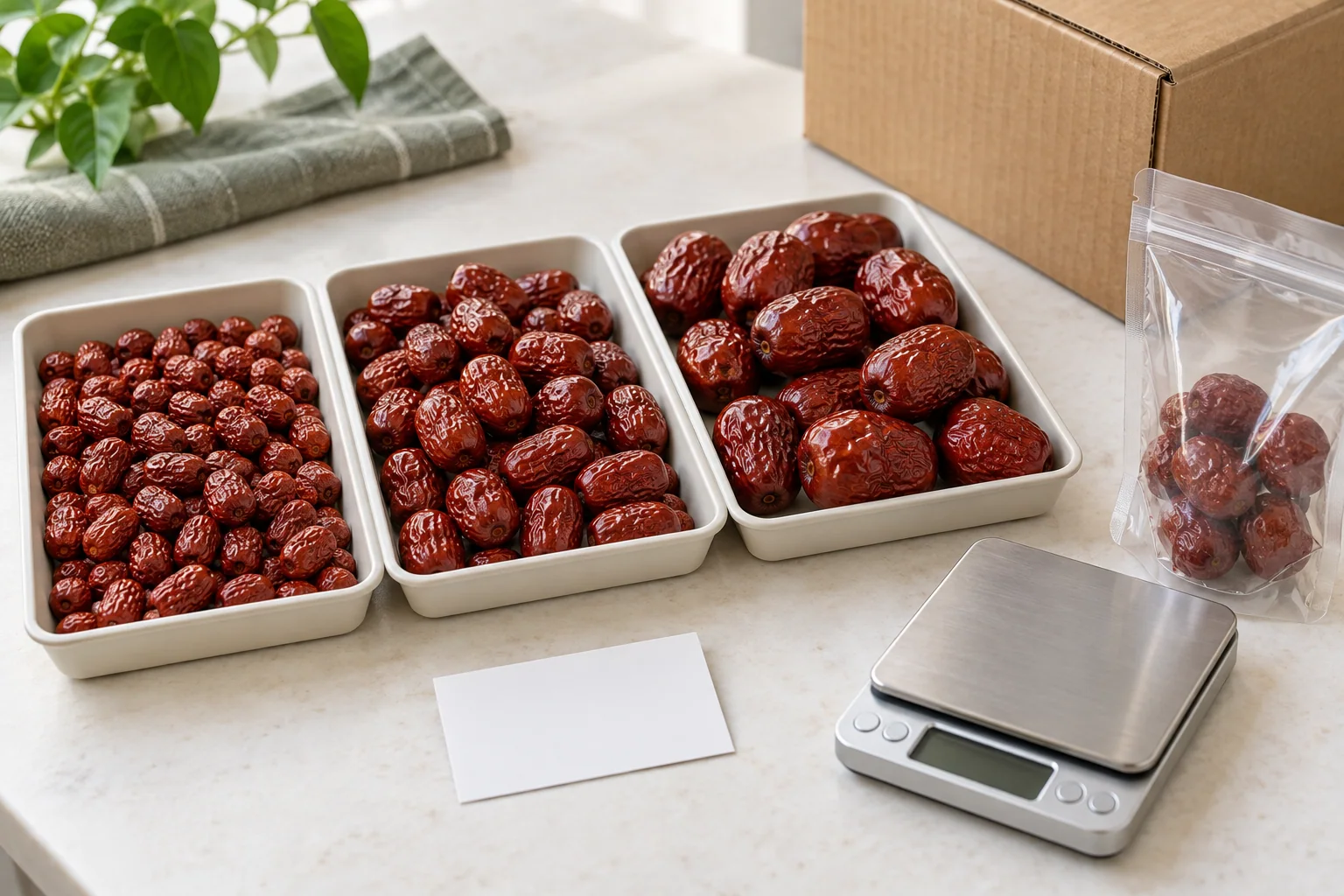
| Size | A stated size band, diameter range, or count by a defined unit of weight |
| Appearance | Expected color range, shape, and degree of natural variation |
| Condition | Whole or pitted; definitions for splits, cracks, broken pieces, and blemishes |
| Moisture | Target or supplier specification, test method, and applicable tolerance |
| Cleanliness | Foreign-material criteria and any lot inspection or test documentation |
| Origin and lot | Product origin as documented, lot identification, and traceability records available |
| Pack | Net weight per retail unit, units per carton, inner bag, and carton dimensions |
Do not compare two suppliers’ size grades unless the measurement basis is the same. A count-per-kilogram range, for example, is meaningful only when both quotes use the same counting method and product condition.
4. Review a representative sample, not just a photo
Ask whether the sample is from current stock and whether it will represent the production lot. Record the sample date, lot or reference number, preparation, size, and pack format. Keep an approved reference sample or clear photos where practical.
During review, check:
- size and appearance consistency across several pieces, not only the top layer
- the share of split, crushed, or visibly damaged fruit
- whether the fruit is whole or pitted as requested
- aroma, texture, and any clumping or surface condition relevant to the intended pack
- net weight, inner-bag seal, and carton protection
Visual and sensory checks are only a receiving screen; they do not replace any testing, food-safety review, or documentation required for the product and transaction. If measurable limits matter, agree the method, tolerance, and who verifies it before production.
For broader sample checks, see how to evaluate dried fruit quality before ordering wholesale.
5. Match the pack to the sales channel
Bulk cartons may work for distributors, repackers, and food-service customers. Retail pouches may be better for grocery shelves or e-commerce, while gift formats need extra attention to visual uniformity and protection. Do not assume one carton weight or pouch size fits every order.
Before approving packaging, confirm net weight, units per carton, inner liner or pouch, seal, moisture protection, carton dimensions, barcode area, and whether the shipment is bulk or retail-ready. Have the responsible U.S. importer or label reviewer approve the final label and product claims before printing.
6. Plan U.S. import and label checks early
U.S. requirements depend on the product, processing, package, and transaction. FDA states that imported food must meet applicable U.S. requirements and that food labeling must be informative, truthful, and in English. FDA also notes that it does not pre-approve individual food labels or shipments. Review FDA guidance for importing human foods and its Food Labeling Guide with the responsible importer or compliance reviewer.
The U.S. importer should also determine whether it is subject to the Foreign Supplier Verification Program (FSVP) and what records or verification activities apply. FDA’s FSVP importer requirements explain the rule and its scope. A supplier can provide product and facility records, but a generic certificate or marketing claim should not be assumed to satisfy every importer’s obligations.
7. Use a written first-order specification
Before placing an order, make sure the purchase record ties the quote to the approved product and sample. It should state:
- Product identity, preparation, origin claim if applicable, and lot reference.
- Size or grade definition, tolerances, and defect criteria.
- Moisture specification and verification method where required.
- Net weight, pack format, units per carton, and carton dimensions.
- Label version, storage instructions, date coding, and barcode responsibility.
- Sample approval, inspection point, lead time, shipping terms, and process for raising a quality issue.
Use the same specification to compare quotes. Then compare total landed cost and sellable units, not just the price per kilogram. Our landed-cost and retail-margin guide can help structure that calculation.
Frequently asked questions
Is “A+” a standard grade for jujube dates?
Do not assume so. Ask the supplier to define the grade in measurable terms and show how it relates to the sample and shipment. Treat it as supplier-defined unless a contract or recognized specification says otherwise.
Does “Hotan” automatically prove origin or quality?
No. Ask what records support the origin statement, whether they apply to the quoted lot, and whether the claim may be used on your U.S. label. Origin and grade are separate fields.
Should I buy whole or pitted red dates?
Choose based on the intended use, shopper expectations, preparation, shelf presentation, and cost. Specify the form explicitly and inspect the sample in the format you plan to sell.
What should I include in a sample request?
State the intended channel, whole or pitted form, size basis, pack weight, estimated carton quantity, destination, and any label or documentation questions. Request a written quote tied to the sample specification.
For samples and current wholesale options, visit the Red Dates (Jujube) product page or send an inquiry.
 Related products